
Blog
TomLeonessa679: What Is It and What Can You Find Online?


In a busy online world, where millions of new usernames appear every day, some names make people stop and ask questions. TomLeonessa679 is one of them. It looks like a mix of a first name, a last name and a number, and that simple pattern is exactly why so many people type it into Google. Maybe you saw it in a comment, on a gaming list or in a message, and now you want to know more. This friendly guide explains what a name like TomLeonessa679 can mean, why people search for it, and how you can look into it in a safe and fair way. We will not guess about anyone’s private life, because only clear and useful facts belong here.
What Is This Name Really?
The honest answer is that nobody can say for sure. When we searched Google for TomLeonessa679, the results did not show a clear person, brand or website with that exact name. Instead, Google showed pages about similar words, such as people named Tom Leonard and a small town in Italy called Leonessa. This often happens with unique usernames, because search engines try to match close words when they cannot find the exact one.
That does not mean the name is empty or unimportant. A username can belong to a private person who simply does not want fame, or it can belong to someone who is just starting online. In short, TomLeonessa679 is best described as a digital label, and a label tells us very little until the owner shares more about themselves in public.
Why Do People Search for Names Like This?
People search for strange usernames for many reasons. Some want to find out who sent a message or left a comment. Others are curious about a name they saw in a video chat, a game lobby or a shopping review. If a person sees TomLeonessa679 under a post they like, the natural next step is to ask Google for more.
There is also a business reason. Website owners and bloggers watch new keywords, because a keyword with low competition can bring steady visitors. When few pages explain a term, one clear and honest article can become very helpful. This is why a topic such as TomLeonessa679 can attract writers, even when the facts are still limited.
How Usernames Like This Are Created
Most usernames follow a simple recipe. A person picks a first name, adds a last name or a nickname, and then adds numbers because the plain version is already taken. The number 679 could be a part of a birthday, a lucky number, a house number or just a random choice. We cannot know which one it is, and it would be unfair to guess. What we can say is that this pattern is very common on email services, social networks and gaming platforms.
Using a name with numbers also helps with order. Platforms need every account to be different, so numbers make each name unique. A handle like TomLeonessa679 is easy to read, easy to type and easy to remember, which are three good qualities for any online name. These small details explain why so many people choose similar styles.
How to Research an Online Name Safely
If you want to learn more about a username, start with the places where it was seen. Look at the original post, profile page or message, and read what is written there. Then try searching the name inside quotation marks on Google, so the search engine looks for the exact word. You can also test the name on social platforms such as Instagram, X, YouTube and TikTok. If TomLeonessa679 belongs to a public creator, one of those places will probably show an official page.
Always stay kind and careful while you search. Do not try to find a home address, a phone number or private family details about anyone. If you meet a profile with that name that asks for money, passwords or personal photos, stop and leave the chat. Real creators usually have a clear bio, a steady posting history and links that match each other across platforms.
How to Spot a Real or Fake Account
A trusted account usually shows a long history. It has older posts, real comments from other people, and a profile picture that is not copied from somewhere else. You can check the date the account was created and see whether the name stays the same on different sites. When you look at any account linked to TomLeonessa679, compare these small signs before you believe any big claim.
Fake accounts often act in the opposite way. They are very new, they follow thousands of people, and they send the same message to many users. Some even copy a famous person’s name and add a few numbers at the end. A reverse image search can show if the profile photo came from another place. When something feels strange, trust that feeling and report the account to the platform.
Tips for Choosing a Strong Username
Maybe this topic made you think about your own online name. A good username is short, easy to say and different from your passwords. Avoid using your full birth date, phone number or street name, because strangers can use those details. A name like this shows how a simple pattern can look neat, but it also shows why you should think before you share personal numbers.
It also helps to keep the same name across the sites you use for work or a hobby, so people can find the real you. Finally, use a strong and unique password for every account, and turn on two step verification when the site offers it.
Why Honest Content Ranks Better on Google
Some writers think they must invent facts to rank for a rare keyword. In reality, Google now checks quality, trust and real value much more than before. Pages that make bold claims without proof often lose visitors quickly, because readers leave when they see that the answers do not match the title. An honest page that says what is known and what is not known builds trust, and trust is what keeps people reading.
If you write about a new keyword, give your readers something useful. Explain the topic in simple words, add safe tips, answer common questions and use clear headings. Over time, links and shares from other sites will show Google that your page helps real people.
Protecting Your Digital Footprint
Every name you use online leaves a small trail. Comments, photos, game scores and reviews can all be linked to one username, and over many years that trail can show a lot about you. Before you post, ask yourself if you would be happy to see this information on a public page. If the answer is no, keep it private or leave it out.
You can also search for your own username from time to time. Check the privacy settings on every account, remove old profiles you no longer use and ask websites to delete posts that share private details. These small habits take only a few minutes, yet they can protect you from scams and unwanted attention in the future.
Conclusion
To sum up, TomLeonessa679 is a name with a lot of curiosity around it but very few confirmed facts. At the time of writing, Google does not show a clear public owner, so the safest way to treat it is as an online username that may belong to anyone. Use the tips in this guide to research carefully, respect privacy and avoid fake accounts. If you decide to use a similar style for your own name, keep your personal numbers private and build your online presence slowly and honestly. A good name is only the start, because trust comes from the real value you share with others.
FAQs
Who is TomLeonessa679?
There is no confirmed public information about the owner. It looks like an online username or a search term, so be careful with any website that claims to know every detail of this person’s life.
Why does Google show other names for this search?
Google often shows close matches when it cannot find the exact word. That is why results about similar names and places can appear.
Can I find the owner of this username?
You can look for public profiles on social platforms, but you should never try to find private details. Please respect the privacy of other people.
What does the number 679 mean?
No one can say for sure. It may be a lucky number, a date part or a random choice made to keep the name unique.
Is it safe to message someone with this username?
It is safe only if you know the person or the account looks trustworthy. Never share passwords, bank details or private photos with a stranger.
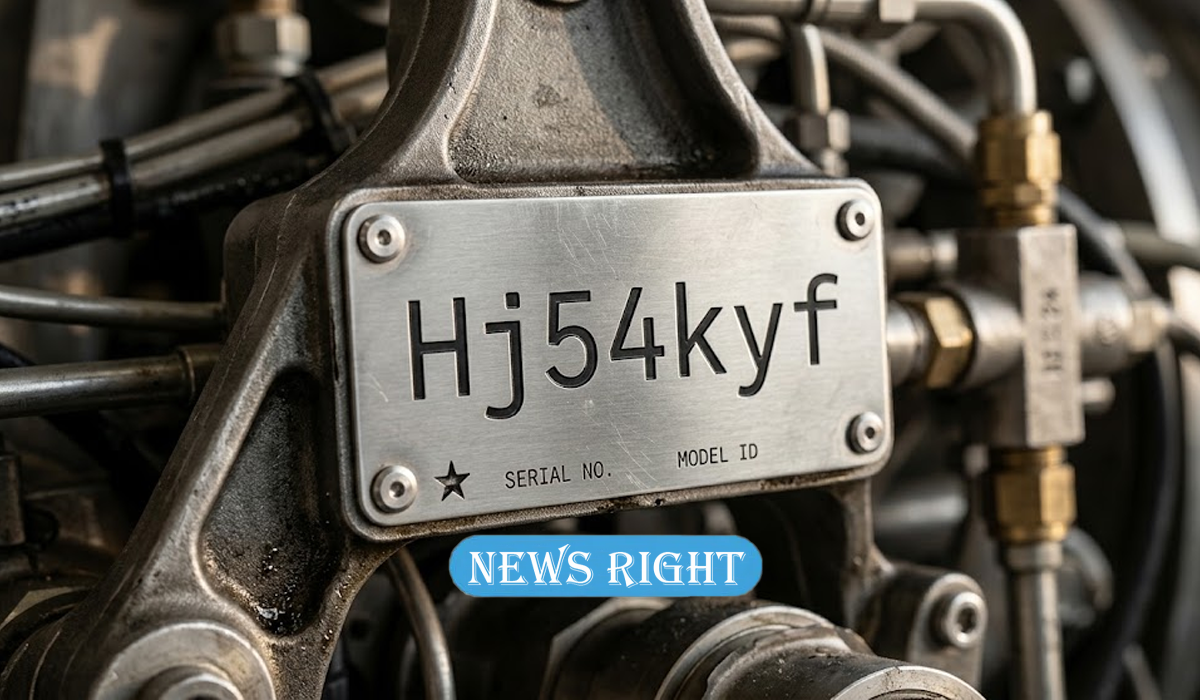
Every day, strange words and codes pop up online, and now and then one of them grabs the attention of thousands of curious people for no clear reason. Hj54kyf is one of those little puzzles. It looks like someone pressed random keys on a keyboard, yet people keep typing it into Google to find out what it means. In this friendly guide, we will look at where it may come from, how codes like it are used, what is true and what is just internet noise, and how you can check the facts yourself. By the end, you will be able to explain it to anyone who asks.
What Is Hj54kyf?
This code is a short string of seven characters. It has two letters, then two numbers, then three letters, and it is not a word in English or in any other language. That is why you will not find it in a dictionary. Most websites that write about it call it an alphanumeric identifier, which is just a fancy way to say a code made from letters and numbers that helps a system tell one thing from another.
The most important point is that a code like this has no fixed meaning by itself. It only makes sense inside the system that created it. In a shop database it could point to one product, and in a login system it could point to one visit. Without that context, nobody can say for sure what it stands for, so be careful with any page that claims to know a secret meaning, because that is usually just a guess written to attract clicks.
Where Did This Code Come From?
Nobody has found a single clear starting point for Hj54kyf. There is no famous person, company, or product linked to it, and no official website that owns it. What we can see is a group of small blogs and news sites that began writing about it at around the same time, each one repeating a similar story about system codes. This often happens when a random string gets a few searches and publishers rush to cover it.
That does not mean the topic is worthless. It tells us that real people were curious, and curiosity is a good reason to write a helpful page. The honest answer is that the origin is unknown, and a trustworthy article should say so openly instead of inventing a dramatic backstory. When you read about any mystery keyword, a calm and open answer is usually a better sign than a confident one.
Is Hj54kyf a UK Car Plate?
One website says it matches a UK vehicle registration, written in the usual way as HJ54 KYF. The format does fit the British system used from 2001 onward. The first two letters show the area where the car was first registered, the two numbers are an age code, and the last three letters are a random mix. The age code 54 normally means a car registered between September 2004 and February 2005.
This is a reasonable explanation, but treat it carefully. Only one source we found makes this claim, and a matching format is not proof that a real car carries that plate today. If you own or are checking a vehicle with this registration, the safest step is to use the official GOV.UK vehicle enquiry service, which can show tax and MOT details. Please do not use a plate to look for private details about a person.
Common Uses of Codes Like This
Since Hj54kyf looks like a system code, it helps to see how similar codes work in daily life. Developers use them as record numbers in databases, as order references in online shops, and as short tracking labels in apps. They are made to be unique, so two different things never share the same label. This keeps large systems tidy, fast, and free from mix-ups, even when millions of records are stored together.
Another common use is a temporary session or reference code. When you log in, book a ticket, or open a support request, the system often creates a short code in the background so it can find your information quickly. Think of it like a numbered ticket at a busy event. The ticket tells staff which entry is yours, but it does not describe you or your story in any way.
Why Are People Searching for Hj54kyf?
The main reason is simple curiosity. When people see an odd code in a link, a log file, an email, or a social media post, they copy it into a search engine to ask what it is. A few publishers then wrote articles about it, which brought more attention, which led to more searches. This loop can make a meaningless string look like a trending topic within a few weeks.
Some searches may also come from people who found the code on paper or on a screen and want to match it to something real, like a vehicle, a parcel, or an account. If that is you, the best plan is to look at where you found it. The place, the sender, and the surrounding words will tell you far more than any general article, including this one, can tell you.
Is This Code Safe?
On its own, Hj54kyf is harmless. A string of letters and numbers cannot be a virus, and we found no evidence that it is linked to malware or scams. It is only text. The risk, if there is one, comes from where you saw it and what you were asked to do next, not from the characters themselves.
Still, use common sense. If the code arrives in a message that asks for money, a password, or a click on an unknown link, treat the whole message as suspicious and do not reply. Also, do not use short codes like this as passwords, since they are easy to guess and are usually meant to identify something rather than to protect it.
How to Check What the Code Means for You
Start by writing down exactly where you found Hj54kyf. Was it in a web address, a receipt, an app, a file name, or on a car? Each place has a different answer. If it was in a link or an email from a company, contact that company through its official website and ask what the code refers to. If it was in a file or a log, search the same folder or program for matching entries.
If you think it may be a UK number plate, use the free GOV.UK vehicle check and read only the public facts it gives. For anything else, a quick search with a few extra words, such as the website name next to the code, often brings better results than the code alone. Be patient, because many codes simply have no public story, and that is perfectly normal.
Conclusion
The story of Hj54kyf is a good reminder that not every trending keyword has a deep secret behind it. It is a short, seven character code with no dictionary meaning, a possible link to a UK plate format, and a lot of curious searches. Its meaning belongs to whichever system or vehicle it points to, and nothing more. If you remember one thing, let it be this: always look at the context first, and trust official sources over dramatic claims. That simple habit will help you understand codes like this one, stay safe online, and avoid wasting time on made-up mysteries.
FAQs
What does Hj54kyf mean?
It has no dictionary meaning. It is most often described as a system-generated code, and in one case as a UK plate format, so the meaning depends on where you saw it.
Is it a real word?
No. It is not a word in any language, just a mix of letters and numbers.
Is it a password or a secret code?
There is no proof of that. It does not contain a hidden message, and it should not be used as a password.
Can it harm my phone or computer?
No. Text on its own cannot cause harm, but always be careful with unknown links or messages that come with it.
How can I find out more?
Check the source where you saw it, ask the sender, or use the official GOV.UK vehicle service if it looks like a plate.

In the busy world of the internet, where one small number can spark hundreds of searches, some codes become popular without any big story behind them. 82.51×63 is one of those codes. It looks like a size, a screen shape, or a product label, yet no famous person, brand, or movie owns it. If you saw it on a web page, in a file name, or inside a spreadsheet and wondered what it means, you are in the right place. This guide explains the term in plain words, shows you how to read the numbers, and helps you decide what it means in your own case. We will also stay honest along the way, because a good article should never invent a story just to sound exciting.
What Does 82.51×63 Mean?
The short answer is that 82.51×63 is a pair of numbers joined by a multiplication sign. In most cases, this style is used to show two sizes, one for width and one for height. The first number, 82.51, has a decimal, which tells us that whoever wrote it cared about small differences. The second number, 63, is a whole number. Together they look like a measurement, and that is the meaning most pages give when they talk about this kind of code.
However, a number pair alone does not tell you the unit. It could be millimeters, centimeters, inches, or even pixels. This is why you should never trust a bare 82.51×63 without checking where it came from. A label on a machine part, a line in a design file, and a title on a website can all use the same digits and still mean very different things. Context is the real key, and we will come back to it many times in this guide.
Why People Search for This Number Pair
People often type number codes into Google when they find them in a hurry. Maybe the code was in an email, on a package, in a work document, or inside a software setting. When we do not understand a code, our first move is to ask a search engine. That is why 82.51×63 gets small but steady interest, even though nobody has built a famous story around it. Most visitors are simply trying to solve a small problem, and they want a clear answer fast.
When you search for it today, you will see that the results are mixed. Many pages show random number tables, data files, or code listings that only happen to include similar digits. Only a few pages try to explain the term, and they usually treat it as a general size or specification format. This is good news for beginners, because it means a calm and honest guide can be very helpful, and it also means you should read every result with care.
Possible Meanings in Real Life
There are three common ways to read a code like this. The first is a physical size, such as the width and height of a sheet, a panel, a small part, or a picture frame. The second is a digital size, such as an image, a layout block, or an area on a screen. The third is a label or dataset name, where the numbers are only a way to sort, store, or find an item later. Each reading is possible, but only the original source can tell you which one is right.
For example, if you saw 82.51×63 in a printing job, it would most likely be a size with a unit like millimeters. If you saw it in a design tool, it might describe a canvas or a component. If you saw it in a database, it could be a code made by the team that built the system. The same digits can live in three different worlds, and that is why smart readers always ask where the number came from before they decide what it is.
How to Read the Numbers Step by Step
Start with the order. In nearly all size codes, the first number is the width and the second is the height, or sometimes the length. So in this case, the width is 82.51 and the height is 63. Next, look at the decimals. A value with two decimal places, like 82.51, often points to careful measuring or an exact export from software. A whole number like 63 is often a rounded or standard value, which is common in real projects.
You can also do some quick math to understand the shape. If you divide 82.51 by 63, you get about 1.31, which means the shape is a little wider than it is tall. It is close to the classic 4 to 3 shape, but not exactly the same. If you multiply the two numbers, you get 5,198.13, which is the area in square units. These small checks help you picture 82.51×63 even before you know the unit, and they take less than a minute to do.
Unit Conversions You Can Try
Because the unit is unknown, it helps to see a few options side by side. If the unit is millimeters, the size is about 8.25 cm by 6.3 cm, or roughly 3.25 by 2.48 inches. That is close to the size of a small card, a tag, or a compact label. If the unit is centimeters, the size grows to about 32.5 by 24.8 inches, which is closer to a poster, a notice board, or a small wall panel.
If the unit is inches, the size would be very large, about 2.1 meters by 1.6 meters, which is the size of a big banner or a door sized panel. If the unit is pixels, it would be tiny on a modern screen, so it would likely be an icon or a small interface element. As you can see, one code can describe a pocket label or a big wall board. Always confirm the unit before you buy, print, or cut anything.
Common Mistakes to Avoid
The biggest mistake is guessing the unit. People often assume millimeters or inches because they are used to one system, and that can lead to costly errors. Another mistake is swapping the width and the height. A panel that is 82.51 wide and 63 high is not the same as one that is 63 wide and 82.51 high, even though the numbers match. When you write 82.51×63 in a plan, add the unit and the direction right next to it so nobody gets confused.
A third mistake is trusting low quality websites that claim to know everything about a code. Some pages fill their text with big promises but give no proof. A good rule is to look for a clear source, such as a manual, a seller page, or the file where you found the number. If no source exists, treat the meaning as unknown and ask the person who sent it to you. A short question is always cheaper than a wrong order.
Conclusion
To sum up, 82.51×63 is a simple number pair that most often describes a size. It does not belong to one person, one company, or one industry, and its true meaning always depends on where you found it. By checking the unit, the order of the numbers, and the source, you can avoid the most common mistakes and read the code with confidence. If you remember only one thing from this guide, let it be this: never guess when a decimal size is involved. A quick question, a small calculation, or a rough sketch can save you money and stress, so the next time 82.51×63 or a similar number appears, you will know exactly what to do.
Frequently Asked Questions
What does 82.51×63 usually represent?
It usually represents a structured size, with the first number as width and the second as height. The unit is not fixed, so you must check the source to be sure.
Is it the same as 82.51×63 written with a letter x?
Yes. Many people type a normal letter x because it is easier on the keyboard. Both versions point to the same number pair.
Which unit should I use?
There is no default unit. Millimeters, centimeters, inches, and pixels are all possible, so always confirm with the person or document that gave you the numbers.
Is it a famous product or a brand name?
No. No major brand or person is linked to it. It is a general format, which is why the meaning depends on context.
How can I check the shape of the size?
Divide the first number by the second. In this case you get about 1.31, so the shape is a bit wider than it is tall.

Every day, people type new and unusual words into Google, and some of them turn into big questions. Liliteenseña is one of those words. At first glance it looks like a name, a username, or a mix of Spanish and English, and that mix is exactly why it catches the eye. If you are reading this, you probably want to know what Liliteenseña means, who or what is behind it, and where you can read more. This guide gives you an honest picture. It explains what is clear, what is still unclear, and how you can check facts yourself without falling for rumors. Think of it as a friendly map for beginners who want to learn without guessing.
Where the Name Liliteenseña May Come From
Names that mix letters and accents often come from online habits. The letter ñ is common in Spanish, so the word may have started in a Spanish speaking community, or it may have been made by someone who simply liked how it looks. The mix of capital letters and accents also makes a word seem more special than it really is. Online, people often join a first name with another word to create a handle, a hashtag, or a channel name. That is a common way new words are born, and it does not always mean there is a famous person or a big story behind them. Many popular usernames began as small jokes between friends and grew from there.
It is also possible that Liliteenseña is a typing mistake or a joined version of several words, such as a name and a short phrase. Because there is no confirmed source, it is best to treat every explanation as a guess until you see proof. Search engines can show pages that look helpful but only repeat each other. When many sites copy the same short text, it can feel like a fact even when nobody checked it. A careful reader asks one simple question: who said this first, and can I see the original?
Why People Search for Liliteenseña
People search for unknown words for many reasons. Some saw the word in a comment, a video description, or a message from a friend. Others found it in a list of usernames and wondered if it belongs to a creator or a business. Curiosity is natural, and the web makes it very easy to follow a small clue from one page to the next. Social media trends can also push a word from nobody to everybody in a single weekend. A short, strange word is easy to remember, which makes people come back and search again later.
There is another reason too. When a search brings no strong result, people keep trying new spellings and new sites. That creates a cycle where a rare word looks more popular than it really is, and interest in Liliteenseña can seem bigger than the facts support. Bloggers see rising numbers and write quickly, sometimes without checking anything. This is why a calm and honest article can help readers more than a fast one filled with invented details.
How to Check Facts Before You Trust a Name
Start with the basics. Search the exact word in quotation marks, then try it without the accent, and then try splitting it into smaller parts. Check the first two pages of results and look for official websites, verified social accounts, and news from known outlets. A real person or brand usually leaves several clear signs, such as an about page, the same name across platforms, and mentions from other trusted sources. If you cannot find these signs for Liliteenseña, take that as useful information, not as a failure.
Next, look closely at dates and sources. A reliable page tells you who wrote it, when it was written, and where its facts came from. Be careful with pages that give a very exact age, birthday, or net worth without any source, because those numbers are often copied or made up. Ask yourself whether the page gives you something you can test, not only something you can believe. If a picture is attached to a name, use reverse image search, since the photo may belong to someone else entirely. A few minutes of patient checking can protect you from sharing a wrong claim with friends or followers.
Staying Safe and Respectful Online
Not every name you find online belongs to a public figure. Many belong to private people, and some may belong to young people who never asked for attention. If a name could point to a real individual, do not try to find their home, their school, or their private life, and do not share guesses about them. The same care applies when you meet Liliteenseña in a comment section or a group chat. Respect keeps both you and other people safe.
It also helps to think before you click. Strange names sometimes appear in spam messages, fake giveaways, or links that ask for your password. If a message uses an unfamiliar word to make you curious, slow down and check where the link goes. Never enter personal details on a page you do not trust, and never download files from unknown senders. If you ever feel unsure, ask a friend or a teacher before you act. Good habits online are simple, and they work just as well for unknown words as for everything else.
Tips for Bloggers and Writers
If you run a blog, you may feel pressure to cover every rising search term. Resist the urge to fill the page with made-up facts. A post about Liliteenseña should tell readers clearly what is confirmed, what is not, and how you looked for answers. This kind of honesty builds trust, and trust is what brings readers back. Google also rewards pages that show real experience, clear sources, and helpful structure over pages that only repeat keywords.
Use simple words, short paragraphs, and clear headings so the page is easy to scan on a phone. Add a short summary near the top, answer common questions in a FAQ section, and update the article when new facts appear. Link to reliable sources when you can, and avoid copying text from other sites. Honest notes such as “we could not confirm this” are not weaknesses, and readers appreciate them. Over time, a careful and friendly article can rank well because it solves the reader’s problem, and that is the real goal of good SEO.
Conclusion
Liliteenseña is a good example of how a single unusual word can spark curiosity across the internet. Right now, the honest answer is that no trusted source confirms who or what it refers to, and that is perfectly fine to admit. What you can do is search carefully, compare sources, protect the privacy of real people, and avoid sharing details you cannot prove. For readers, this means slowing down before believing a bold claim. For writers, it means choosing accuracy over speed. If trustworthy information appears in the future, this guide can be updated with real facts. Until then, keep your curiosity, keep your standards high, and remember that a short, clear, honest answer is better than a long, invented story.
Frequently Asked Questions
Who is Liliteenseña?
There is no confirmed public information that points to one specific person. Any detailed biography you see online should be treated with care until a trusted source supports it.
Is it a real name or a username?
It could be either one. Without an official profile or a trusted article, nobody can say for sure.
How do you say the word out loud?
There is no official pronunciation because the source is unknown. In Spanish, the ñ sounds like “ny” in the English word canyon, so many readers say it that way.
Why does the table say “not publicly confirmed”?
Because honest information is better than invented details. When facts are missing, it is more helpful to say so than to guess.
Where can I find reliable information?
Look for official websites, verified social media accounts, and well-known news outlets. If none of them mention the word, the information is probably not available yet.


Jememôtre Meaning: A Simple Guide to Measuring Yourself

What Is Hj54kyf? Easy Meaning, Uses and Facts (2026 Guide)

What Is kl7cjnsb8fb162068? Easy Guide to This Mystery Code

Who Is Eric Ritchson? The Quiet Older Brother of Actor Alan Ritchson

Pinoroduct Com: A Simple Guide for First-Time Visitors (2026)

Who Is Ramtin Abdo? The Quiet Life of Kate Scott’s Ex-Husband
-
 Celebrity2 months ago
Who Is Eric Ritchson? The Quiet Older Brother of Actor Alan Ritchson
-
 Technology2 months ago
Pinoroduct Com: A Simple Guide for First-Time Visitors (2026)
-
 Celebrity3 months ago
Who Is Ramtin Abdo? The Quiet Life of Kate Scott’s Ex-Husband
-

 Celebrity3 months ago
Ellen Heidingsfelder: The Full Story of Cooper Manning’s Wife
-

 Celebrity3 months ago
Thierry Bordelais: The Quiet Husband of Karla Homolka
-

 Celebrity3 months ago
Who Is Valerie Guiliani? Everything to Know About T. J. McConnell’s Wife
-

 Tech2 months ago
What Is B06X95MVYN? A Simple Guide to the Amazon Swimsuit ASIN
-

 Celebrity3 months ago
Karima Jackson: What We Really Know About Ice Cube’s Daughter