
Blog
Who Is Whosvalora? The Simple Truth Behind the Viral Name


If you have spent any time scrolling through comment sections, bios, or short videos lately, you may have seen a strange word pop up again and again, and you probably wondered if it was a person, a brand, or a joke. That word is Whosvalora, and it has sparked more curiosity than most celebrity names do. People type it into Google every day, hoping to find a real face, a real story, or an official page. The honest answer is more interesting than a simple biography, so this guide walks you through what the internet has really said about it, what is still unclear, and how you can talk about it without spreading wrong information.
What Is Whosvalora?
At its heart, Whosvalora is a word that people use online as a tag, a nickname, or a playful hint that they are part of a trend. Most articles describe it as a community-driven identity meme, which means no single person invented it and no single person controls it. The name reads like a question, “who’s Valora?”, and that question does the work. When someone drops it into a comment or a bio, other people often reply, ask what it means, or join the joke.
It helps to think of the tag as a hashtag that grew its own small culture. There is no login, no sign-up page, and no central list of members. You can use it today and drop it tomorrow, and nobody will check or judge you. That low effort is a big part of why so many people feel comfortable joining in, and it is also why the meaning can change from one post to the next.
Where Did It Come From?
Nobody can point to one clear starting moment. Several sources say the earliest mentions appeared in late 2024, first in small corners of the internet like comment threads and Discord servers, and later in bigger social feeds. No app, brand, or famous creator announced it. It seems to have appeared on many platforms at almost the same time, as creators tried call-and-response videos and mystery-style posts.
Because there is no origin story, different websites tell slightly different tales, and that can be confusing. Some call it a collective handle that anyone can use, while others call it an anonymous digital identity. When you read about Whosvalora, check whether a site gives real examples or only repeats the same general lines. Pages that claim a secret founder or a hidden biography deserve extra care, since no trusted source backs those claims up.
Why Did It Go Viral?
Curiosity is the main engine. A short, strange word that sounds like a question makes people stop and ask, “Wait, what is that?” Social platforms reward that kind of reaction, because comments and replies tell the algorithm that a post is interesting. As more people asked about Whosvalora, more posts appeared, and the cycle kept going without any paid campaign behind it.
Another reason is how easy it is to join. You do not need money, a camera, or a big following to use the tag. It also lets people feel part of a group without sharing personal details, which many users like in a time when privacy matters more than ever. Some experts also say that writers and website owners helped the trend grow by publishing many explainer pages, so search interest and social interest fed each other.
How Do People Use It?
Most people use the tag in three simple ways. They add it to a bio as a small badge, they comment it under a post to start a joke, or they use it as a tag on short videos that tell a mystery story. Some creators turn it into a game by asking followers to guess who Valora is. Others use it as a fun username when they want to stay anonymous.
Small brands and creators have also tried to ride the wave, hoping to catch extra views. This can work for a short time, but it works best when the post is honest and does not pretend to be an official channel. If you want to try Whosvalora in your own content, keep it light, add your own idea, and avoid claiming that you own the name. The trend belongs to everyone, and that is exactly why it stays fun.
Is Whosvalora a Real Person or a Brand?
Based on what is publicly available, no. There is no verified biography, no confirmed real name, and no blue-tick account that proves ownership. Several reports state clearly that Whosvalora is not a registered company and not a verified celebrity or influencer. That is why the Quick Bio table above says “not confirmed” in so many places, because writing a fake life story would only mislead readers.
You may still find pages that treat the name like a person, with a birthday, a hometown, or a net worth. Be careful with those. Without a real source, such details are guesses at best and invented at worst. A trustworthy article should tell you what is known, what is not known, and where the gaps are. That honest approach is what makes a page useful, and it is the standard this guide tries to follow.
Is There an Official Website or App?
No official site or app has been confirmed. One website describes a browser-based tool with the same name that reviews how your social media profile looks to outsiders. That page seems to be the exception, and other sources do not mention it. So if you see a service using this name, treat it as a separate product until you can verify who runs it.
The safest rule is simple. Do not share passwords, payment details, or private photos with any page that says it is the official home of Whosvalora. Because the tag spread on its own, anyone who claims to run it should be asked for proof. If a page cannot give clear contact details, a company name, and a privacy policy, it is better to close the tab.
Benefits and Risks
There are real upsides to joining a light trend like this. It can help you meet new people, start friendly talk, and make your posts feel more playful. It also gives you a way to belong without sharing your name, age, or location. For many users, that mix of fun and privacy is the whole point.
There are risks too. Since nobody owns the name, scammers or spam accounts can borrow the name to look popular or trustworthy. Fake giveaways, strange links, and made-up stories can hide behind a trending word. Slow down before you click, check the account history, and remember that a viral tag is not a guarantee of safety.
What Might Happen Next?
Trends like this usually live as long as people keep sharing them. Some fade within months, while others turn into long-lasting inside jokes. The future of Whosvalora depends on whether creators keep finding new ways to play with it, and on whether search interest stays high enough for people to keep asking about it.
If it does fade, it will still be a useful example of how online culture works today. A single word, with no owner and no plan, reached many screens because people enjoyed taking part. For writers, marketers, and curious readers, that is a lesson about how small ideas can grow when they invite everyone in.
Conclusion
It is not a movie star, a founder, or a company. It is a shared word that grew into a small online culture because people were curious and enjoyed joining in. That makes a classic biography impossible, yet it also makes the story more interesting, since the real subject is the crowd behind it. If you remember only one thing, let it be this: enjoy the trend, but check your sources. Use the tag with a smile, stay careful with unknown links, and share only what you can trust, and that simple habit will help you spot honest information the next time a new viral name appears.
FAQs
What is this tag in simple words?
It is a viral online tag that people use in bios, comments, and videos as a playful identity signal.
Is it a real person?
No confirmed person or public figure is known by this name.
Who created it?
No creator has been verified. It appears to have grown naturally across many platforms.
Is there an official app or website?
None has been confirmed, so be careful with pages that say they are official.
Is it safe to use the tag?
The tag itself is harmless, but you should avoid suspicious links and fake accounts that use the name.

Every few months, a strange new word starts to appear in search bars, comment sections and social media bios. Right now, that word is Skyesolinda. Maybe you saw it on a profile, in a blog post or in a message from a friend, and you wondered what it really means. You are not alone. Many people type it into Google every day, hoping to find a clear answer. The truth is a little more complicated than most websites admit. In this guide, we look at what the term seems to mean, where it may come from and why so many people are curious about it. We also share simple tips to help you check any unknown name online.
What Does the Word Mean
This term has no single official meaning. When you search for it, you find small blogs that explain it in very different ways. Some say it is a pretty baby name that parents might choose for a daughter. Others call it a username, a creative project or a digital brand. A few pages even describe it as a tool or a big idea about innovation, but they never give proof. Because of this, it is wise to treat each claim with care and to look for a second source before you believe it.
The most believable idea is also the simplest. Skyesolinda looks like a mix of Skye and Solinda, or maybe Skye, Sol and Linda. Skye points to the sky or to the famous Scottish island. Sol means sun in Latin and Spanish, and linda means pretty in Spanish and Portuguese. Together, the parts give a warm, bright and dreamy feeling, even if nobody planned it that way. Many readers enjoy that open feeling, because it lets them add their own meaning to the word.
Where Does the Name Come From
No dictionary, census record or official website explains the origin of Skyesolinda. That is why we cannot call it a traditional name with a long history. Names such as Skye have clear roots, and Linda has been popular in many countries for decades. Joining them into one long word looks more like a modern creation than an old family name that was passed down for many years.
Modern names often grow this way. Parents, gamers and online creators like to blend soft sounds into something unique. A word that nobody else owns is easy to remember and easy to find on search engines. This may explain why the term feels fresh and why it works so well as a handle on social media. It sounds gentle, it looks stylish and it is simple to type. For many creators, that mix of style and simplicity is exactly what they want from a new name.
Is It a Real Person or a Brand
At the time of writing, we found no trusted proof that Skyesolinda is a famous actor, singer, athlete or public figure. No Wikipedia page, news story or official interview points to one clear person. Many sites that look like biographies simply repeat the same vague lines. For that reason, this article does not invent a birthday, a job or a net worth, because a real biography needs real facts. We would rather tell you what is unknown than fill the page with guesses.
It could still be a private person’s username, a small shop or a new online project. Small creators often use a unique name long before they become widely known. If you find a profile with this name, check its posts, links and history before you trust it. A real account usually shows steady activity over time, friendly replies and photos that do not appear on other pages. Take your time, because a quick look is rarely enough to judge a stranger online.
Why Are People Searching for Skyesolinda
Curiosity is the main reason. When a rare word shows up in a comment, a username or a link, people want to know the story behind it. Search engines then show a few blog posts, and each one adds a little more confusion. Many readers click several pages and still feel unsure, which keeps the search going. This is common with new names that have no official page to explain them, and it is why clear and honest guides are so helpful.
Another reason is trend building. Website owners notice that a term has low competition, so they publish many short guides about it. This pushes the word higher in results and makes it look more popular than it may be. A good habit is to read widely and look for pages that give clear sources instead of big promises. If a page cannot explain where its facts came from, treat it as an opinion and not as a final answer.
How People Use This Name Online
Based on what we found, Skyesolinda appears mostly as a creative label. Some people may use it as a social media handle, a nickname for a gaming profile or a title for a design project. Others may choose it for a blog or a small online shop. Because it is long and unique, it is easy to search and hard to confuse with other names, which is a big plus for anyone building a personal brand or a small online community.
This also brings a small risk. Since anyone can use a unique name, scammers can copy it too. Fake pages sometimes use a trending word to attract clicks and to look more real. Please remember one simple rule. Never share passwords, payment details or private photos with an unknown account, even if the name sounds friendly and pretty. When in doubt, ask a trusted friend to look at the page with you. A second pair of eyes can spot problems that you may miss.
How to Check an Unknown Name Before You Trust It
Start with a simple search that puts the name inside quotation marks. This tells Google to look for the exact word and not for similar ones. Then open the first few results and compare them. If five pages tell five different stories, you have learned something important already. Next, search the same name on the main social media apps, and look at when each account was created and how often it posts.
You can also use a reverse image search on any profile photo. If the same picture appears under many different names, the account is probably not honest. Finally, look for a link to an official website, a contact page, a business email or a news story from a trusted outlet. Real people and real brands usually leave a clear trail, and that trail is easy to follow once you know where to look. If you cannot find one, it is better to stay careful and keep your personal details private.
Conclusion
So, what is Skyesolinda? The honest answer is that it is a rare, modern word with no official meaning and no confirmed owner. It sounds like a mix of sky, sun and beauty, and many people enjoy it for that reason. It may be a name, a handle or a small project, but nobody can prove it yet. If new facts appear in the future, the story of this word may change, so keep an eye on trusted news and official pages. Until a trusted source steps forward, the smartest move is to enjoy the word, stay curious and check every claim you read.
Frequently Asked Questions
What does Skyesolinda mean?
There is no official meaning. Most people guess that it blends Skye, Sol and Linda, which suggest the sky, the sun and something pretty.
Is Skyesolinda a real person?
We found no trusted proof of a famous person with this name. It may be a private username or a small online project.
How do you say it?
Most people say it as sky, so, LIN, da. Because the word has no official source, small changes in sound are fine.
Is it a good baby name?
Some websites suggest it as a unique name. It is long and rare, so think about spelling, nicknames and how it sounds with your family name.
Can I trust websites that explain it?
Be careful. Many pages repeat the same vague lines without sources. Compare several pages and trust the ones that show clear proof.

In the busy world of online writing, where small blogs grow into trusted names and readers want to talk to the people behind the words, one simple question keeps coming up: how do you reach the right person? If you typed Thestripesblog Contact Fisher into Google, you are probably looking for a name, an email address, or a safe way to send a message. This guide explains what is known, what is still unclear, and how to write to the team with a real chance of getting an answer. We keep the words simple and the steps short, so you can act in just a few minutes.
What Is Thestripesblog?
Thestripesblog is the web address of a blog called The Stripe. Search results link it to Grace Atwood, a writer who shares ideas about style, books, beauty and daily life. Many readers say they enjoy the friendly voice and the simple advice, and the blog has been a steady place for inspiration for many years. That long history is one reason people trust it and want to get in touch.
Because the blog is personal and not a big company, the team behind it may be small. A small team usually means fewer phone numbers and more simple forms. When you understand this, a search like Thestripesblog Contact Fisher makes more sense: people want a human being, but the site may only offer one general door.
Who Is Fisher?
This is the part where we need to be careful. Many articles online talk about Frank Fisher as a writer or helper linked to the blog, but they do not agree with each other. Some say he is an author, some say he is a contributor, and some do not say who he is at all. We could not find a reliable source on the official site that confirms his role.
So if you plan to write about him, be honest with your readers. You can say that people search for this name, and you can explain how to use the main contact page. It is better to skip big claims about his job or life than to repeat things that nobody has proven. Good readers notice when a blog is guessing.
Why People Search for Thestripesblog Contact Fisher
People have many reasons to look up Thestripesblog Contact Fisher. Some are readers who want to say thank you for a helpful post. Others are brands, authors or small shops that want the blog to review their work. A few readers simply found a broken link or a small mistake and want to report it so the site stays clean.
The search is also popular because the answer is not always easy to see. A person may click through the menu, scroll to the footer, and still feel lost. When a topic is hard to find, writers publish guides about it, and those guides then show up in Google. That is why you see so many pages with almost the same title, and why it helps to read them with care.
Where to Look for Contact Details
Start with the official website. Open the main menu and look for words like Contact, Contact Us or Work With Me. If you cannot find them, scroll to the very bottom of the page, because many blogs keep their contact link in the footer. This is the safest place to begin, since the details come straight from the owner.
Next, look at the About page and any social media buttons. Some writers answer messages on Instagram or in their newsletter more often than by email. Several websites mention info@thestripesblog.com as an email address, but you should treat it as a hint and not as a promise. Compare it with the address on the official page before you send anything. This simple check is the heart of any Thestripesblog Contact Fisher search.
How to Write a Message That Gets Read
A short and clear message beats a long one every time. Use a subject line that tells the reader what you want, such as a question about a post, a review request or a partnership idea. Then say who you are in one sentence, explain your reason in two or three sentences, and end with a polite thank you. Busy bloggers can answer a message like this in less than a minute.
Add one useful link if it helps, such as your website or the post you are talking about, and avoid heavy files. Do not send the same message ten times, because that can look like spam and slow down the reply. If you use the form for Thestripesblog Contact Fisher, check your email address twice. A small typing mistake is one of the most common reasons why people never hear back.
Staying Safe While You Reach Out
The internet has many copy sites that show old, wrong or even made up contact details. Some pages also ask for money or private data before they give you an email, and that is a warning sign. A real contact page will never ask for your bank details or your password. If a page makes you feel unsure, close it and go back to the official site.
Keep your own details private too. Share only your name, your email and the reason you write, and leave out phone numbers or home addresses unless the person asks. If you read a guide about Thestripesblog Contact Fisher that sounds too sure about private facts, treat it with care. Trust the source that belongs to the blog, then use other pages only as helpful extras.
Tips to Get a Faster Reply
Timing and tone make a big difference. Send your message on a weekday, keep it friendly, and ask one clear question at a time. If you are offering something, explain how it helps the readers of the blog and not only your own business. People answer faster when they can see what is in it for their community.
If a week passes with no answer, send one gentle reminder and then wait. Some bloggers get hundreds of emails, so a delay does not always mean no. You can also follow the blog on social media and join the conversation in a natural way. A real relationship often works better than any perfect Thestripesblog Contact Fisher message.
Conclusion
Finding the right person at a blog does not have to feel like a puzzle. Begin with the official website, look in the menu and the footer, and use the form or the email that the site itself shows. Be careful with the name Fisher, because the facts are not clear, and avoid pages that ask for money or private data. Whether you want to say thanks, share a business idea or report a small problem, a short, calm and honest message, sent with a thank you at the end, gives you the best chance of an answer. Keep this advice in mind the next time you search for Thestripesblog Contact Fisher, and remember that good manners work online just like they do in real life.
FAQs
Is Thestripesblog Contact Fisher an official page?
No. It is a search phrase that people type into Google. The official place to start is the contact page on www.thestripesblog.com, and every other page is only a guide.
Who is Fisher at Thestripesblog?
The role is not confirmed. Some articles online call him Frank Fisher and link him to the blog, but we found no clear proof on the official site.
Can I email the blog directly?
Sometimes. Some sites list info@thestripesblog.com, but you should confirm it on the official contact page first. If there is only a form, use the form.
How long does a reply take?
It depends on the team. Many small blogs answer within a few days, while busy weeks can take longer. A short and polite message usually helps.
Why do so many pages use the phrase Thestripesblog Contact Fisher?
Writers follow search trends, and many people look for this phrase. That is why you see lots of similar guides, but not all of them are checked or trustworthy.
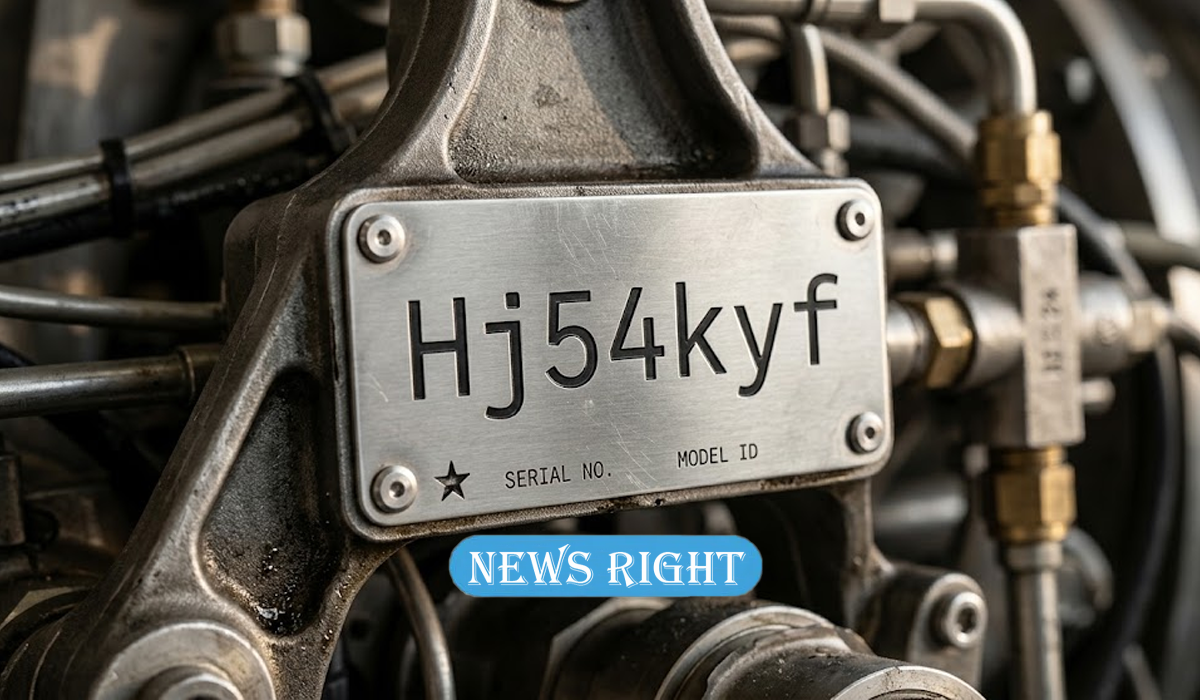
Every day, strange words and codes pop up online, and now and then one of them grabs the attention of thousands of curious people for no clear reason. Hj54kyf is one of those little puzzles. It looks like someone pressed random keys on a keyboard, yet people keep typing it into Google to find out what it means. In this friendly guide, we will look at where it may come from, how codes like it are used, what is true and what is just internet noise, and how you can check the facts yourself. By the end, you will be able to explain it to anyone who asks.
What Is Hj54kyf?
This code is a short string of seven characters. It has two letters, then two numbers, then three letters, and it is not a word in English or in any other language. That is why you will not find it in a dictionary. Most websites that write about it call it an alphanumeric identifier, which is just a fancy way to say a code made from letters and numbers that helps a system tell one thing from another.
The most important point is that a code like this has no fixed meaning by itself. It only makes sense inside the system that created it. In a shop database it could point to one product, and in a login system it could point to one visit. Without that context, nobody can say for sure what it stands for, so be careful with any page that claims to know a secret meaning, because that is usually just a guess written to attract clicks.
Where Did This Code Come From?
Nobody has found a single clear starting point for Hj54kyf. There is no famous person, company, or product linked to it, and no official website that owns it. What we can see is a group of small blogs and news sites that began writing about it at around the same time, each one repeating a similar story about system codes. This often happens when a random string gets a few searches and publishers rush to cover it.
That does not mean the topic is worthless. It tells us that real people were curious, and curiosity is a good reason to write a helpful page. The honest answer is that the origin is unknown, and a trustworthy article should say so openly instead of inventing a dramatic backstory. When you read about any mystery keyword, a calm and open answer is usually a better sign than a confident one.
Is Hj54kyf a UK Car Plate?
One website says it matches a UK vehicle registration, written in the usual way as HJ54 KYF. The format does fit the British system used from 2001 onward. The first two letters show the area where the car was first registered, the two numbers are an age code, and the last three letters are a random mix. The age code 54 normally means a car registered between September 2004 and February 2005.
This is a reasonable explanation, but treat it carefully. Only one source we found makes this claim, and a matching format is not proof that a real car carries that plate today. If you own or are checking a vehicle with this registration, the safest step is to use the official GOV.UK vehicle enquiry service, which can show tax and MOT details. Please do not use a plate to look for private details about a person.
Common Uses of Codes Like This
Since Hj54kyf looks like a system code, it helps to see how similar codes work in daily life. Developers use them as record numbers in databases, as order references in online shops, and as short tracking labels in apps. They are made to be unique, so two different things never share the same label. This keeps large systems tidy, fast, and free from mix-ups, even when millions of records are stored together.
Another common use is a temporary session or reference code. When you log in, book a ticket, or open a support request, the system often creates a short code in the background so it can find your information quickly. Think of it like a numbered ticket at a busy event. The ticket tells staff which entry is yours, but it does not describe you or your story in any way.
Why Are People Searching for Hj54kyf?
The main reason is simple curiosity. When people see an odd code in a link, a log file, an email, or a social media post, they copy it into a search engine to ask what it is. A few publishers then wrote articles about it, which brought more attention, which led to more searches. This loop can make a meaningless string look like a trending topic within a few weeks.
Some searches may also come from people who found the code on paper or on a screen and want to match it to something real, like a vehicle, a parcel, or an account. If that is you, the best plan is to look at where you found it. The place, the sender, and the surrounding words will tell you far more than any general article, including this one, can tell you.
Is This Code Safe?
On its own, Hj54kyf is harmless. A string of letters and numbers cannot be a virus, and we found no evidence that it is linked to malware or scams. It is only text. The risk, if there is one, comes from where you saw it and what you were asked to do next, not from the characters themselves.
Still, use common sense. If the code arrives in a message that asks for money, a password, or a click on an unknown link, treat the whole message as suspicious and do not reply. Also, do not use short codes like this as passwords, since they are easy to guess and are usually meant to identify something rather than to protect it.
How to Check What the Code Means for You
Start by writing down exactly where you found Hj54kyf. Was it in a web address, a receipt, an app, a file name, or on a car? Each place has a different answer. If it was in a link or an email from a company, contact that company through its official website and ask what the code refers to. If it was in a file or a log, search the same folder or program for matching entries.
If you think it may be a UK number plate, use the free GOV.UK vehicle check and read only the public facts it gives. For anything else, a quick search with a few extra words, such as the website name next to the code, often brings better results than the code alone. Be patient, because many codes simply have no public story, and that is perfectly normal.
Conclusion
The story of Hj54kyf is a good reminder that not every trending keyword has a deep secret behind it. It is a short, seven character code with no dictionary meaning, a possible link to a UK plate format, and a lot of curious searches. Its meaning belongs to whichever system or vehicle it points to, and nothing more. If you remember one thing, let it be this: always look at the context first, and trust official sources over dramatic claims. That simple habit will help you understand codes like this one, stay safe online, and avoid wasting time on made-up mysteries.
FAQs
What does Hj54kyf mean?
It has no dictionary meaning. It is most often described as a system-generated code, and in one case as a UK plate format, so the meaning depends on where you saw it.
Is it a real word?
No. It is not a word in any language, just a mix of letters and numbers.
Is it a password or a secret code?
There is no proof of that. It does not contain a hidden message, and it should not be used as a password.
Can it harm my phone or computer?
No. Text on its own cannot cause harm, but always be careful with unknown links or messages that come with it.
How can I find out more?
Check the source where you saw it, ask the sender, or use the official GOV.UK vehicle service if it looks like a plate.


Skyesolinda Explained: What It Means and Why People Are Searching It

Thestripesblog Contact Fisher: Easy Ways to Reach the Team in 2026

Who Is Whosvalora? The Simple Truth Behind the Viral Name

Who Is Eric Ritchson? The Quiet Older Brother of Actor Alan Ritchson

Pinoroduct Com: A Simple Guide for First-Time Visitors (2026)

Who Is Ramtin Abdo? The Quiet Life of Kate Scott’s Ex-Husband
-
 Celebrity2 months ago
Who Is Eric Ritchson? The Quiet Older Brother of Actor Alan Ritchson
-
 Technology3 months ago
Pinoroduct Com: A Simple Guide for First-Time Visitors (2026)
-
 Celebrity3 months ago
Who Is Ramtin Abdo? The Quiet Life of Kate Scott’s Ex-Husband
-

 Celebrity3 months ago
Ellen Heidingsfelder: The Full Story of Cooper Manning’s Wife
-

 Celebrity3 months ago
Thierry Bordelais: The Quiet Husband of Karla Homolka
-

 Celebrity3 months ago
Who Is Valerie Guiliani? Everything to Know About T. J. McConnell’s Wife
-

 Tech2 months ago
What Is B06X95MVYN? A Simple Guide to the Amazon Swimsuit ASIN
-

 Celebrity3 months ago
Karima Jackson: What We Really Know About Ice Cube’s Daughter